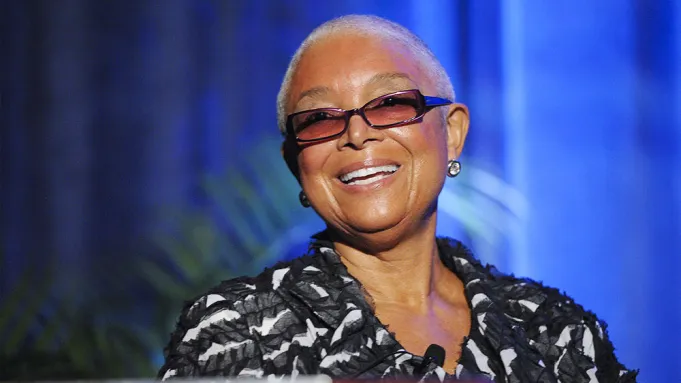
In the early ’60s, while studying at the University of Maryland, Camille Olivia Hanks met Bill Cosby during his stand-up comedy days in Washington—a simple blind date that quickly turned into something deeper as they fell in love.
From what I’ve seen in stories like this, people often overlook how much support matters; she even left school to stand beside his burgeoning career in entertainment, which says a lot about her role beyond the spotlight often highlighted by CNN.
By 1964, they were married and built a family with five children, but life was not without pain—especially in 1997 when their son, Ennis, was murdered, a tragedy tied in memory to the character Theo Huxtable.
Over the years, I’ve noticed how public figures process grief differently; during a one-on-one interview with Oprah Winfrey, Dr. Camille Cosby explained how she eventually found joy after mourning the loss of a child. Watching that, it felt like seeing a real-life Clair Huxtable—so composed that even Oprah seemed star-struck by her poise and grace, showing strength that often goes unnoticed in the wider controversy.
Answer of = Camille Cosby Another Victim of the Controversy
During her 2000 appearance on Oprah, Camille revealed:
During her appearance with Oprah Winfrey, what stood out to me was how integrity felt deeply important to her, even more than monetary benefits. She spoke about family, friendships, and the security of people who truly care, something I’ve personally seen matter more over time than success alone.
She described it as a blessing to be surrounded by genuine connections, where love feels wonderful and real. In that moment, she made it clear—her name is Camille, not Bill, and that identity carries its own weight and values rooted in integrity.
Looking back, she shared how in her mid-thirties, she became keenly aware of herself during a life transition. After she had dropped out of college to marry Bill Cosby at 19, raising five children, she later decided to go back to school because she didn’t feel fulfilled educationally. Leaving during her sophomore year stayed with her, but when she went back, her self-esteem grew.
She earned her master’s and then a doctoral degree, and from my experience, education truly helped her come out of myself, shaping a stronger sense of identity and purpose. That was a beautiful answer.
On Camille Cosby and the Problem With Asking, ‘Why Did She Stay?’
In every discussion about a scandal-mired celebrity husband, the same endlessly looping question appears—why she stayed, what she knew, and whether her refusal to leave shows her own shortcomings.
I’ve noticed that naysayers often say triumphantly, “he’d be out on his ass,” but are we really sure? When you look at Camille Cosby and Bill Cosby after 50 years, through the births of five children and even a tragic death of a child, the story becomes far more complex than a simple judgment.
She stood by him through womanizing, career ups and downs, and a lawsuit involving claims he drugged and raped a dozen women.
On November 6, when an AP reporter asked about rape allegations on camera, and he tried to bully the moment into scuttling the tape with non answers, she was still by his side. As a respectability politics devotee, he even used words like integrity to shame the reporter into doing his bidding—and she was still there. That’s where the real why begins.
We ask this of scorned wives, devoted fans, even victims—sometimes like Don Lemon being pulled into the same narrative—and shift blame for the actions of others onto the person most directly affected. Reports on CNN, including Blue Telusma, highlight how in the Cosby scandal, the longtime wife Camille became collateral damage.
As Telusma writes, she later adds that maybe she believes him for a reason—because it’s easier to trust someone you love than a stranger, or even 15 voices saying otherwise.
From my own perspective, people often imagine they would handle bad things differently, thinking they have better, superior choice-making skills. They say they’d never marry a predator, never have stayed, never been cheated on for decades, never trusted a date rapist, a babysitter, or even walked into the wrong club in the wrong outfit—but that’s a fantasy.
In reality, we can’t always stop bad things that happen. People we trust can victimize, people we love can betray, and tragedy can strike randomly, irrationally, even heartlessly—a deeply terrifying truth about a rapist, abuser, or cheating bastard we might once have chosen to meet and love for years before things go royally wrong.
There’s also a strong desire for control over our own fortunes, something almost seductive that pushes us away from rationality toward a desired outcome. From outsiders, the behavior of insiders can look inane—like fans defending Ray Rice calling violence an “honest mistake,” or the Penn State case where Joe Paterno turned a blind eye to child sexual abuse, or supporters of Jian Ghomeshi refusing to see an abusive monster.
Writers like Rebecca Traister in The New Republic argue that accusations against Cosby as a creep existed for years, even in court, but many fans refused to believe or simply forgotten, clinging to the image of white blamelessness from The Cosby Show and Mr. Huxtable, a reality they had emotionally bought into—even when it proved wrong.
For longtime fans, their feelings, pride, and sense of morality and lawfulness are tied to these objects of adoration, but for spouses, it’s their entire lives. To believe in a spouse is to marry into an assumption that they are not a monster, and after decades, it’s hard to admit that life may be a lie built on assumptions that turned wrong.
Add confirmation bias, and people can convince themselves to believe the seemingly absurd, even when numbers—like 15 women with similar stories and little to gain—make others scoff. From the outside vantage point of the Cosby marriage, it may seem huge and horrifying, something that should never blow over in this Teflon celebrity age, even if they have confronted it privately or worked through it away from the public reality.
What often gets lost is that blaming Camille for not reacting, not distancing, or not responding to horrifying accusations ignores the fact that she is not the one who committed those acts.
Placing negative judgment on a partner who did nothing wrong, or telling a rape victim what they should have done against an assailant in such an orally raped situation, creates the same harmful mindset. In the end, the fallout and collateral damage should not shift the blame away from Bill Cosby.
FAQs
Is Bill Cosby’s wife Camille still with him?
Yes, Camille Cosby and Bill Cosby are still legally married, sharing 60 years together as of early 2025, though living separately between Massachusetts and Pennsylvania, continuing to support him despite legal troubles and sexual assault allegations.
Why was The Cosby Show controversial?
The past failings of black sitcoms lay in racist stereotypes, yet some scholars criticized The Cosby Show for unintentionally invoking racism.
Did Camille Cosby ever defend Bill?
Cosby has defended her husband against accusations that he has sexually assaulted women over his career.
What ended Bill Cosby’s career?
The comedian Bill Cosby, who enjoyed huge fame in the 1980s and 1990s with his sitcom The Cosby Show, saw his reputation shattered after dozens of women came forward with allegations of rape, sexual harassment, and sexual misconduct dating back to the early 1960s, though he maintained all encounters were consensual.
About the Author