
EasyJet Flight U2238 Emergency Landing Newcastle: Full Incident Breakdown and Timeline
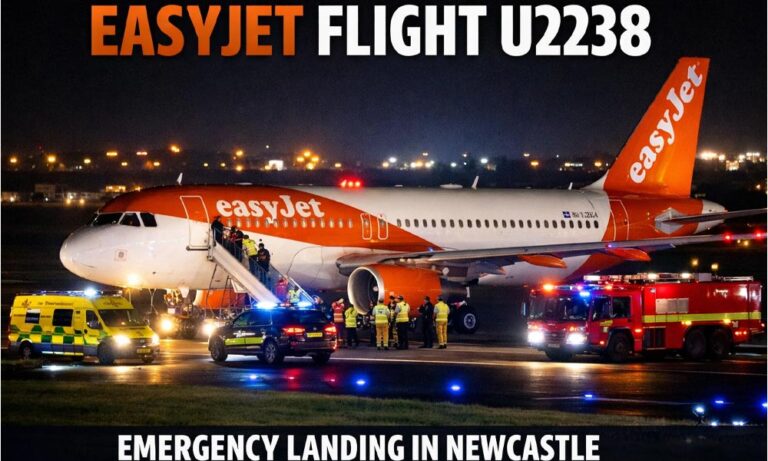
What Is EasyJet Flight U2238 Emergency Landing Newcastle?
The phrase “easyJet flight U2238 emergency landing Newcastle” refers to a serious in-flight situation where an EasyJet aircraft had to divert from its original route and perform an emergency landing at Newcastle Airport.
In aviation, an emergency landing does not always mean a crash or disaster—it is often a preventive safety decision taken by pilots when something unusual or potentially risky occurs.
These decisions are based on strict international aviation safety standards designed to protect passengers, crew, and the aircraft itself.
Flight U2238’s emergency landing gained attention because it involved a sudden mid-air change in plans, raising questions about what exactly triggered the situation and how it was handled.
EasyJet Flight U2238 Route and Travel Plan
Before the emergency, Flight U2238 was operating as a routine commercial journey, following a pre-defined flight plan approved by aviation authorities.
A standard travel plan includes:
- Assigned cruising altitude
- Specific air corridors
- Estimated arrival time
- Fuel calculations with backup reserves
Everything initially proceeded as expected. The aircraft climbed smoothly, reached cruising altitude, and continued along its planned route. Passengers were likely relaxed, with normal cabin service in progress.
However, aviation is a highly dynamic environment, and even a small technical alert or unexpected condition can force the crew to reassess the situation instantly.
EasyJet Flight U2238 Emergency Landing Newcastle: When Things Changed
The turning point came mid-flight when the cockpit crew detected something abnormal.
In modern aircraft, pilots rely heavily on automated warning systems that monitor everything from engine performance to cabin pressure. Even a minor warning can trigger a chain of checks and procedures.
Possible triggers in such cases include:
- Engine irregularities or unusual readings
- Cabin pressure fluctuations
- Electrical or system malfunctions
- Smoke or unusual smell in the cabin
- A serious medical emergency
Once the issue was identified, the situation moved from routine to precautionary. The pilots immediately began evaluating options while maintaining full control of the aircraft.
This moment is critical in any flight because quick and correct decision-making can prevent a minor issue from becoming a major emergency.
What Happened Inside the Plane Mid-Air
While the pilots handled the technical side, the cabin crew managed the passenger experience.
Inside the aircraft, passengers may have noticed:
- A calm but serious announcement from the captain
- Cabin crew moving quickly but professionally
- Changes in the plane’s direction or altitude
- Preparation for a possible early landing
Flight attendants are trained extensively for such scenarios. Their responsibilities include:
- Keeping passengers calm
- Ensuring seat belts are fastened
- Preparing the cabin for landing
- Assisting anyone feeling anxious or unwell
Even if the situation feels tense, airline crews follow structured emergency protocols, which help maintain order and safety throughout the incident.
EasyJet Flight U2238 Emergency Landing Newcastle Decision Explained
The decision to divert to Newcastle was based on risk assessment and safety prioritization.
Pilots must quickly answer key questions:
- Is it safe to continue to the original destination?
- How serious is the issue?
- What is the nearest suitable airport?
In this case, continuing the flight would have increased uncertainty. By choosing an emergency landing, the crew ensured:
- Immediate technical inspection
- Access to emergency services
- Reduced risk for passengers
This type of decision is actually a sign of good aviation practice, not failure. Airlines train pilots to act early rather than delay action.
Back Casting Room Explained: A Deep Dive into Future Planning
10 Best Dresses for Dinner Date Female (Look Stunning & Classy)
I Tried Sniffies and It Made Getting Laid as a Gay Man Almost Too Easy
Why Newcastle Airport Was Chosen
Newcastle Airport was not chosen randomly—it met several critical requirements.
- Key Factors Behind the Decision
- Proximity: It was one of the closest airports within safe range
- Runway Capability: Long enough to handle the aircraft safely
- Emergency Services: Fully equipped fire, medical, and response teams
- Weather Conditions: Clear and stable for landing
Air traffic control plays a major role here. They coordinate with pilots in real time, providing data about nearby airports, traffic, and conditions.
Newcastle offered the best balance of speed, safety, and operational readiness, making it the ideal diversion point.
EasyJet Flight U2238 Emergency Landing Newcastle Timeline
To understand the event clearly, here’s a more detailed step-by-step timeline:
Pre-Flight
- Aircraft inspected and cleared for departure
- Passengers boarded normally
- Flight departed on schedule
Early Flight Phase
- Smooth climb to cruising altitude
- Normal cabin operations
Mid-Flight Incident
- Warning or issue detected in cockpit
- Crew begins internal checks
- Situation escalated to precautionary level
Decision Phase
- Pilots contact air traffic control
- Emergency landing option considered
- Newcastle selected as diversion airport
Diversion
- Aircraft changes route
- Cabin crew informs passengers
- Safety procedures initiated
Landing
- Emergency services on standby
- Aircraft lands safely at Newcastle
- No major injuries reported
Post-Landing
- Passengers disembark safely
- Aircraft undergoes technical inspection
- Airline arranges further travel plans
The EasyJet Flight U2238 emergency landing at Newcastle highlights how modern aviation prioritizes safety above everything else.
What might seem like a frightening situation is actually a demonstration of:
- Well-trained pilots
- Efficient crew coordination
- Advanced aircraft monitoring systems
The safe landing shows that emergency procedures exist for a reason—and when used correctly, they save lives.
Landing at Newcastle: What Happened on the Ground
As EasyJet Flight U2238 approached Newcastle Airport, emergency procedures were already in place on the ground.
Air traffic control had cleared the runway in advance, ensuring that no other aircraft would interfere with the landing. Meanwhile, airport emergency teams—including fire crews, medical staff, and technical support—were positioned strategically near the runway.
The aircraft made a controlled and safe landing, which is always the primary goal in such situations. Once the plane came to a complete stop, emergency personnel quickly approached to assess the situation.
Passengers were asked to remain seated initially while safety checks were carried out. After clearance from the crew and ground staff, a controlled disembarkation process began.
Medical Help and Hospital Transfer
In many emergency landings, medical situations are one of the key reasons behind the diversion.
If Flight U2238 involved a passenger health issue, trained medical responders would have boarded the aircraft immediately after landing. Their role includes:
- Assessing the condition of the affected passenger
- Providing immediate treatment
- Deciding whether hospital transfer is necessary
If required, the passenger would be transported via ambulance to a nearby hospital for further care.
Airlines and airports are fully equipped to handle such emergencies, ensuring that medical attention is quick, professional, and life-saving when needed.
EasyJet Flight U2238 Emergency Landing Newcastle: Passenger Experience
For passengers onboard, the experience of an emergency landing can be both stressful and memorable.
Many travelers may have felt:
- Anxiety after hearing the captain’s announcement
- Concern about the reason behind the diversion
- Relief once the aircraft landed safely
However, what often stands out is the professionalism of the crew. Cabin staff are trained to:
- Communicate clearly and calmly
- Reassure passengers
- Maintain order during unexpected situations
After landing, passengers are usually guided step-by-step, whether it’s disembarking, waiting for updates, or arranging onward travel.
In most cases, passengers later describe such experiences as frightening at first but reassuring due to the crew’s handling of the situation.
How Other Flights Were Affected
An emergency landing doesn’t just impact one flight—it can temporarily affect airport operations as well.
At Newcastle Airport, the arrival of Flight U2238 may have led to:
- Short delays for incoming and outgoing flights
- Temporary runway restrictions
- Adjustments in air traffic scheduling
Air traffic controllers work quickly to minimize disruption, but safety always takes priority. Once the emergency situation is under control, normal operations resume as soon as possible.
Such disruptions are usually short-lived and handled efficiently without major long-term impact.
EasyJet Response and Passenger Support
After an incident like this, the airline’s response plays a crucial role.
EasyJet typically follows structured protocols to support passengers, including:
- Providing clear communication about what happened
- Offering alternative flights or travel arrangements
- Assisting with accommodation if delays are long
- Ensuring passengers’ well-being throughout the process
In addition, the airline may conduct a technical inspection of the aircraft to identify and resolve the issue before returning it to service.
This kind of response helps rebuild passenger confidence and shows the airline’s commitment to safety and customer care.
What We Learn from EasyJet Flight U2238 Emergency Landing Newcastle
The incident involving Flight U2238 highlights several important lessons about modern aviation:
1. Safety Comes First
Pilots are trained to prioritize safety above schedules, costs, or convenience. An emergency landing is always about preventing risk—not reacting to disaster.
2. Training Makes the Difference
From pilots to cabin crew and ground staff, everyone follows strict training protocols that ensure smooth handling of critical situations.
3. Technology Plays a Key Role
Modern aircraft are equipped with advanced monitoring systems that detect even minor issues early, allowing timely decisions.
4. Emergency Systems Work
The successful landing at Newcastle shows that aviation emergency systems—from air traffic control to airport response teams—are highly effective.
Final Wrap-Up
The easyJet flight U2238 emergency landing Newcastle incident is a strong example of how the aviation industry handles unexpected situations with precision and care.
While passengers may experience fear in the moment, the outcome—a safe landing and proper support—proves that safety systems are working exactly as intended.
People Also Ask
What was the worst EasyJet crash?
EasyJet has a strong safety record and has not experienced any major fatal crashes. The airline is known for maintaining high safety standards.
Which airline has the most emergency landings?
There is no single airline with the “most” emergency landings. Larger airlines operate more flights, so they naturally report more precautionary landings.
Has EasyJet ever had an emergency landing?
Yes, EasyJet flights have made several emergency landings in the past due to technical or medical reasons. These are standard safety procedures in aviation.
What is EasyJet’s longest flight?
EasyJet’s longest flights are typically within Europe and usually last around 4 to 5 hours, depending on the route and weather conditions.
What flight lasts 57 seconds?
The shortest commercial flight in the world is the Loganair Westray to Papa Westray flight, which can last as little as 57 seconds under ideal conditions.
What’s the salary of an EasyJet pilot?
EasyJet pilot salaries vary by experience. First officers typically earn between £50,000 and £80,000 per year, while captains can earn £100,000 or more annually.
Which airline has the highest paid pilots?
Airlines like Emirates and Qatar Airways are known for offering some of the highest pilot salaries and benefits in the industry.
Is 30 too old to become a pilot in the UK?
No, 30 is not too old. Many people start pilot training in their 30s and still build successful aviation careers.
How many days a week do EasyJet pilots work?
EasyJet pilots do not follow a fixed weekly schedule. They usually work in shifts, often 4–5 days on duty followed by rest days, depending on their roster.
Why can’t pilots fly after 65?
International aviation regulations limit pilots from flying commercial aircraft after the age of 65 due to potential health risks and slower reaction times.




Leave a Reply