Repmold
In this article, you will learn everything about Repmold in a very simple and easy way. We will explain what Repmold is, how it works, its technology, and why it is changing modern manufacturing. You will also discover its benefits, real-world uses, challenges, and future possibilities. By the end, even a beginner (or a younger reader) will clearly understand how Repmold is shaping the future of production and design.
What Is Repmold? Definition & Core Concept
Repmold is a modern manufacturing concept that focuses on creating accurate, fast, and efficient mold production using advanced digital technology. In simple words, Repmold helps industries design and produce physical objects from digital models with high precision.
Traditionally, making molds was slow, expensive, and required a lot of manual effort. But Repmold changes this by using digital systems, automation, and smart tools to simplify the entire process.
The core idea behind Repmold is “digital-to-physical transformation,” meaning a design created on a computer can quickly become a real object without wasting time or materials.
Introduction to RepMold and Its Cutting-Edge Technology
Repmold is not just a simple tool—it is an advanced technology system that combines engineering, software, and automation.
At its core, Repmold uses digital modeling systems to design molds with extreme accuracy. These designs are then processed using automated machines that create real-world objects.
What makes Repmold special is its ability to reduce human error and improve production speed. Even complex designs that once took weeks can now be completed in hours or days.
This technology is widely used in industries like automotive, healthcare, electronics, and manufacturing.
The Evolution of Molding and Replication
Before Repmold, molding was a slow and manual process. Workers had to carve, shape, and test molds repeatedly until they were perfect.
Over time, technology improved and machines were introduced. But still, traditional methods had limitations like high cost, waste of materials, and time delays.
Then came digital manufacturing systems like Repmold, which changed everything. Now, designs are created digitally and directly turned into production-ready molds.
This evolution shows how industries are moving from manual labor to smart automation through Repmold.
Core Technologies Behind Repmold
The success of Repmold depends on several advanced technologies working together:
- Computer-Aided Design (CAD)
- 3D modeling software
- Automated machining systems
- Cloud-based data processing
- Smart manufacturing algorithms
These technologies allow Repmold to create highly detailed and accurate molds.
For example, CAD software helps designers build exact models, while automated machines bring those designs into reality. This combination makes Repmold extremely powerful and efficient.
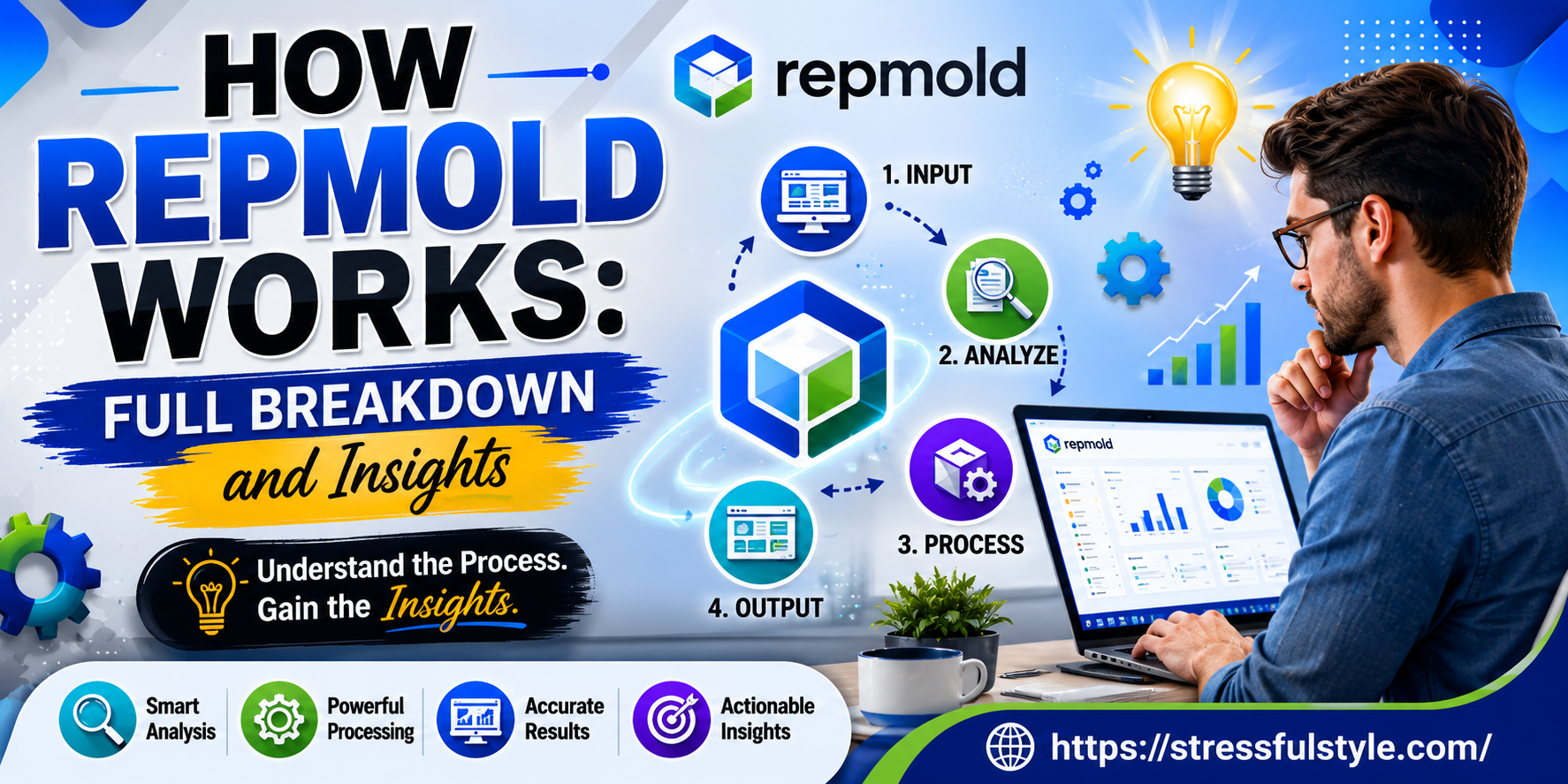
How Repmold Works: The Digital-to-Physical Process
The working process of Repmold is simple but very powerful. It follows these steps:
First, a digital design is created using software. This design is a virtual model of the final product.
Next, Repmold systems analyze the design and prepare it for manufacturing. The system checks for errors, improves structure, and ensures precision.
Then, automated machines start building the mold based on the digital instructions. These machines follow exact measurements, so there is very little chance of mistake.
Finally, the completed mold is tested and refined if needed.
This digital-to-physical process is what makes Repmold fast, reliable, and modern.
The Core Features & Technologies of Repmold
Repmold comes with many powerful features that make it useful in modern industries:
- High precision manufacturing
- Fast production speed
- Reduced material waste
- Automation-driven workflow
- Smart error detection systems
These features help companies save time and money while improving quality.
One of the most important strengths of Repmold is its ability to repeat the same process with consistent results, which is very important in mass production.
How Repmold Differs from Traditional Molding Methods
Traditional molding methods rely heavily on manual labor and physical tools. This often leads to mistakes and slower production.
In contrast, Repmold uses digital systems and automation to ensure accuracy and speed.
Key differences include:
- Traditional methods are manual, while Repmold is digital
- Traditional molding takes more time, while Repmold is faster
- Traditional methods waste more material, while Repmold is efficient
- Traditional methods depend on human skill, while Repmold uses smart systems
This is why many industries are shifting toward Repmold technology.
Benefits of Using Repmold Over Traditional Manufacturing Methods
There are many advantages of using Repmold:
First, it saves time by speeding up the production process. What used to take weeks can now be done in days.
Second, it reduces costs by minimizing material waste and manual labor.
Third, it improves accuracy, ensuring that every mold is exactly the same.
Fourth, it increases productivity, allowing companies to produce more in less time.
Finally, Repmold supports innovation because designers can easily test and improve their ideas.
Major Applications of Repmold Across Industries
Repmold is used in many industries today:
- Automotive industry for car parts
- Healthcare for medical equipment
- Electronics for device components
- Aerospace for precision engineering
- Consumer products for everyday items
Each industry benefits from the speed and accuracy of Repmold.
For example, in healthcare, Repmold helps create precise medical tools that can improve patient care.
The Role of AI and Machine Learning in Repmold Production
Artificial Intelligence (AI) plays a major role in Repmold systems.
AI helps analyze designs, detect errors, and improve efficiency. Machine learning allows Repmold to learn from past production and improve future results.
This means the more Repmold is used, the smarter it becomes.
AI also helps predict problems before they happen, reducing waste and improving quality control.
Challenges, Limitations, and Restrictions in Adopting Repmold
Even though Repmold is powerful, it still has some challenges:
- High initial setup cost
- Need for skilled operators
- Dependence on advanced software
- Maintenance requirements
- Learning curve for new users
Small companies may find it difficult to adopt Repmold at first, but over time, the benefits usually outweigh the challenges.
The Future of Repmold: 2026 and Beyond + Industry Impact
The future of Repmold looks very promising.
In the coming years, Repmold is expected to become even more advanced with stronger AI integration and faster production systems.
Industries will rely more on automation, and Repmold will play a key role in Industry 4.0 and smart manufacturing.
We may also see smaller, more affordable Repmold systems that small businesses can use easily.
Overall, Repmold is not just a trend—it is the future of manufacturing.
Final Conclusion
Repmold is changing the way products are designed and manufactured. It is fast, smart, and highly efficient compared to traditional methods. From digital design to physical production, Repmold simplifies everything and helps industries grow faster.
If technology continues to evolve at this pace, Repmold will likely become a standard in modern manufacturing worldwide.
About the Author