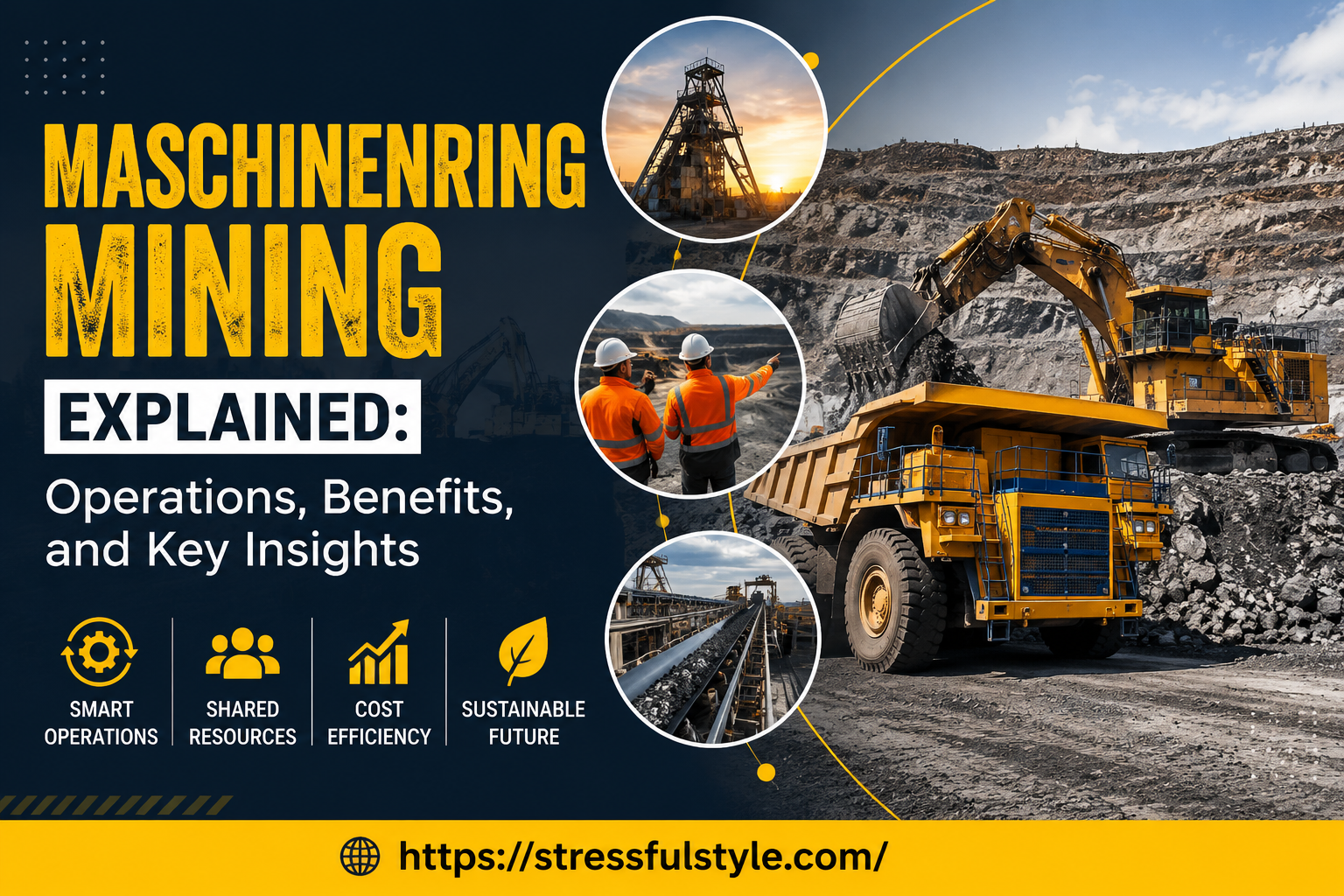
Maschinenring Mining
Maschinenring Mining is an innovative cooperative approach that is reshaping how mining operations are planned and managed. Instead of relying on individual ownership, this model focuses on shared equipment, skilled labor, and coordinated scheduling to improve efficiency and reduce costs. In this article, you will explore its origin, working system, core components, benefits, environmental impact, technological role, and key challenges. It also compares traditional mining models and highlights future opportunities, giving a complete overview of how Maschinenring Mining is influencing modern industry practices.
What Is Maschinenring Mining?
Maschinenring Mining is a cooperative model designed to optimize mining operations. It allows multiple stakeholders to share resources, equipment, and labor in a collaborative environment. This approach transforms how companies interact within the sector.
At its core, Maschinenring Mining fosters partnerships among smaller operators who may struggle with high operational costs alone. By pooling their assets, they can access advanced tools and skilled workers without the significant financial burden of ownership.
The concept emphasizes efficiency and sustainability. Participants benefit from improved scheduling and resource allocation while adhering to environmental standards. This innovative framework not only enhances productivity but also nurtures community ties.
In an industry often characterized by competition and isolation, Maschinenring Mining presents a refreshing shift that promotes cooperation over rivalry. The result? A more resilient mining ecosystem prepared for future challenges.
History and Origin of the Maschinenring Concept
The Maschinenring concept traces its roots back to Austria in the 1950s. It was initially developed to assist farmers with shared resources, promoting collaboration and efficiency.
As agriculture evolved, so did the idea of collective operations. The model proved successful by allowing smaller farms to pool their equipment and labor, reducing costs and increasing productivity.
Over time, this cooperative approach caught the attention of various industries beyond farming. Mining, with its significant capital requirements and workforce needs, became a prime candidate for adopting such a model.
This shift opened doors for new partnerships among mining companies. They recognized that working together could lead to improved operational efficiencies while sharing risks associated with exploration and extraction activities.
Through these developments, Maschinenring evolved into a comprehensive framework adaptable to diverse sectors like mining today. This adaptability highlights its enduring relevance in modern resource management strategies.
Why the Mining Industry Needs a Cooperative Model
The mining industry faces unique challenges, from fluctuating commodity prices to regulatory pressures. These issues often strain individual companies, making it difficult for them to remain profitable and competitive.
A cooperative model can provide a solution. By joining forces, mining operators can share resources and expertise. This collaboration reduces operational costs and enhances efficiency, allowing smaller firms access to advanced technologies they might not afford independently.
Moreover, cooperative structures encourage knowledge sharing among members. Best practices in safety, environmental management, and innovative techniques become accessible across the board.
In times of crisis or market downturns, a united front helps mitigate risks more effectively than isolated approaches. Companies gain resilience through shared strategies that adapt quickly to changing conditions in the sector.
Adopting a cooperative model fosters innovation while building stronger community ties within the industry.
How Maschinenring Mining Works in Practice
Maschinenring Mining operates on a cooperative model that fosters collaboration among mining companies. Members share resources, including equipment and personnel, maximizing efficiency while minimizing costs.
In practice, companies pool their assets to tackle projects collectively. This approach allows for more flexible scheduling, as members can access machinery when needed without the burden of ownership expenses.
Labor is shared among participants too. Skilled workers rotate between sites, ensuring that expertise flows across different operations. This not only enhances productivity but also encourages knowledge transfer within the industry.
Scheduling plays a crucial role in optimizing output. Using advanced software solutions, Maschinenring Mining organizes tasks to align with available resources and timelines efficiently.
By leveraging these collaborative methods, Maschinenring Mining transforms traditional approaches into innovative practices that benefit all involved parties significantly.
Core Components of Maschinenring Mining (Equipment, Labor & Scheduling)
Maschinenring Mining thrives on collaboration, which hinges on three core components: equipment, labor, and scheduling.
The right equipment is crucial for efficiency. Shared machinery among cooperative members minimizes costs while maximizing usage. This approach ensures that each partner has access to high-quality tools without the burden of ownership.
Labor dynamics in Maschinenring Mining are transformative. By pooling expertise and resources, workers can specialize in their strengths. This collaborative workforce not only enhances productivity but also fosters a supportive community where skills are exchanged freely.
Scheduling is another vital element that streamlines operations. Utilizing joint calendars allows partners to coordinate activities effectively. This synchronization reduces downtime and maximizes output across all mining sites involved in the cooperative model.
These interdependent components create a seamless workflow that benefits every participant within the Maschinenring framework, setting it apart from traditional mining practices.
Key Services Offered in Mining Operations
Maschinenring Mining offers a variety of essential services tailored to enhance operational efficiency. These include resource management, which focuses on optimizing the use of personnel and equipment.
Labor pooling is another key service. This allows mining companies to share skilled workers during high-demand periods, reducing downtime while maximizing productivity.
Additionally, Maschinenring Mining provides access to specialized machinery. Members can utilize advanced equipment that might otherwise be too costly for individual operations.
Training programs are also integral. They ensure that all workers maintain high safety standards and stay updated with industry best practices.
Logistical support streamlines transportation and supply chain processes, enabling smoother operations from site to market. Each service plays a crucial role in fostering collaboration among mining enterprises while driving innovation within the sector.
Benefits of Maschinenring Mining for Companies
Maschinenring Mining offers numerous advantages for companies looking to optimize their operations. One significant benefit is cost efficiency. By pooling resources, businesses can share expensive equipment and labor costs, which reduces overall expenditures.
Collaboration is key in this model. Companies within a Maschinenring network can leverage each other’s strengths and expertise, fostering innovation and enhancing productivity. This cooperative approach often leads to improved project management and faster turnaround times.
Flexibility also plays a crucial role. Companies can quickly adapt to changing market demands or unexpected challenges without the burden of heavy investments in infrastructure or personnel.
Furthermore, risk sharing mitigates financial pressures during downturns in the market. With shared responsibilities, individual companies experience less volatility and greater stability over time.
Engaging with a cooperative fosters community ties that enhance corporate social responsibility initiatives—something increasingly valued by consumers today.
Read More Articles!
Pantagonar: Meaning, Uses, Benefits, and Complete Guide
Wooflix: Full Breakdown, Features, and Internet Usage Guide
Hypackel: Definition, Purpose, and Internet Usage Guide
Hypackle: Meaning, Uses, Features, Benefits, Origin And Purpose
Environmental and Social Benefits of Maschinenring Mining
Maschinenring Mining promotes sustainable practices that minimize environmental impact. By pooling resources, companies can reduce waste and optimize the use of materials. This collaborative approach leads to more efficient energy consumption.
Socially, Maschinenring Mining fosters community engagement. Local workers are often prioritized for job opportunities, strengthening ties between mining operations and surrounding communities.
Furthermore, cooperative models encourage knowledge sharing among members. This collaboration enhances safety protocols and improves overall operational standards in the industry.
By prioritizing eco-friendly technologies and practices, Maschinenring Mining demonstrates a commitment to reducing carbon footprints while maximizing resource efficiency. It creates a win-win scenario where both the environment and local communities benefit from conscientious mining operations.
The Role of Technology in Modern Maschinenring Mining
Technology is transforming Maschinenring Mining, enhancing efficiency and collaboration among members. Cutting-edge software solutions streamline operations, from project management to labor coordination. These tools allow real-time tracking of resources and job progress.
Automation plays a significant role in modern mining practices as well. Equipment equipped with IoT sensors provides valuable data on machinery performance and maintenance needs. This approach minimizes downtime and maximizes productivity.
Moreover, advances in drone technology offer aerial surveys that improve site assessments. Drones can quickly gather critical information about land topography or resource distribution without disturbing the environment.
Artificial intelligence also contributes significantly by analyzing vast amounts of geological data to identify optimal extraction methods. In this cooperative model, shared access to technological advancements fosters innovation across all participating companies, ensuring they remain competitive in an evolving market landscape.
Challenges and Limitations of Maschinenring Mining
Maschinenring Mining, while innovative, faces several challenges. One significant hurdle is the coordination among various stakeholders. Each member has distinct goals and expectations that can lead to conflicts.
Funding also poses a challenge. The cooperative model often relies on collective investment from its members. This can limit resources, especially for smaller entities with less capital.
Regulatory compliance adds another layer of complexity. Different regions have varying mining laws and regulations that must be navigated carefully.
Additionally, technology integration can be uneven among participants. Not all members may have access to advanced tools or training necessary for efficient operations.
Market fluctuations create uncertainty in resource availability and pricing. A downturn could impact cooperative profitability and sustainability significantly, challenging the very foundation of the Maschinenring model.
Maschinenring Mining vs Traditional Mining Ownership Models
Maschinenring Mining fundamentally reshapes the traditional mining ownership model. Instead of individual companies bearing all costs and risks, this cooperative approach allows members to share resources, equipment, and expertise.
In a typical ownership model, hefty investments burden single entities. This often leads to inefficiencies or financial strain when markets fluctuate. Conversely, Maschinenring Mining promotes collective responsibility among its members. Costs are distributed evenly across the network.
The agility of Maschinenring systems also stands out. Members can quickly adapt to changes in demand without being tied down by heavy asset ownership. Flexibility translates into improved operational efficiency.
Additionally, collaboration fosters innovation in problem-solving as diverse minds join forces to tackle challenges together. This communal spirit contrasts sharply with the isolated nature of conventional models where competition often stifles collaboration.
Embracing cooperation over solitary endeavors paves the way for sustainable practices within an evolving industry landscape.
Read More Articles!
URLWO Explained: Origin, Features, and How It Works
TxMyZone: Meaning, Uses, Benefits, Features and Purpose
Supermaked: Meaning, Uses, and Complete Guide
What Is Milyom? Meaning, Origin, and Internet Discussion Explained
Future Outlook of Maschinenring Mining in 2026 and Beyond
As the mining industry continues to evolve, the future of Maschinenring Mining looks promising. By 2026, we can expect enhanced collaboration among companies participating in this cooperative model. The demand for sustainable practices will only grow stronger, pushing more organizations toward environmentally-friendly operations.
Technological advancements are set to play a crucial role in shaping these dynamics. Innovations such as AI and automation will streamline processes and improve efficiency within the cooperative framework. This could lead to significant cost savings while maintaining high safety standards.
Moreover, as regulatory pressures increase globally around environmental protection and resource management, the Maschinenring model provides a robust solution that aligns with both economic viability and social responsibility. Companies may find themselves increasingly drawn to this cooperative approach as they navigate these challenges.
The adaptability of Maschinenring Mining enhances its appeal for small-to-medium enterprises aiming to compete against larger corporations without incurring heavy capital expenditures upfront. By pooling resources together, businesses can share risks while fostering an environment of mutual support—a key component for success in today’s competitive landscape.
Looking ahead beyond 2026, it is reasonable to anticipate further growth in interest towards collaborative models like Maschinenring Mining across various sectors—not just limited to mining but potentially expanding into other resource-based industries where cooperation can yield tangible benefits. As stakeholders recognize the value of shared expertise and joint initiatives, we might witness a transformative shift in how mining—and perhaps even broader industrial landscapes—operate on a global scale.
People also ask about Maschinenring Mining
What is a Maschinenring?
A Maschinenring is a cooperative system where mining companies share machines, workers, and resources to reduce costs and improve efficiency. It helps small and large operators work together instead of working alone.
What type of machinery is used in mining?
Mining uses heavy machines like excavators, drilling rigs, dump trucks, loaders, and crushers. Modern mines also use automated and GPS-based equipment for better safety and performance.
What are the top 10 mining companies?
Some of the top mining companies are BHP, Rio Tinto, Vale, Glencore, Anglo American, Freeport-McMoRan, Barrick Gold, Newmont, Teck Resources, and Fortescue Metals Group.
Who is the largest manufacturer of mining equipment?
Caterpillar is generally considered the largest mining equipment manufacturer. Other big names include Komatsu, Sandvik, and Liebherr.
About the Author