PDRN Injections
The under-eye area is often the first place to show tiredness, even after a full night’s sleep. Fine crepiness, faint shadows and a slightly hollow look are among the hardest concerns to treat, largely because the skin there is thinner and more delicate than almost anywhere else on the face. It’s this exact challenge that has made PDRN injections one of the most talked-about treatments for the eye area among London clinics.
Why the under-eye area behaves differently
Skin around the eyes has fewer oil glands, less collagen support and a much thinner structure than the rest of the face, which means it shows dehydration, fine lines and dullness earlier and more visibly. It’s also an area where heavier treatments, like larger volumes of filler, can look unnatural or cause puffiness if not handled carefully. That’s part of why practitioners have turned to gentler, biology-led options instead.
What is PDRN, exactly?
PDRN stands for polydeoxyribonucleotide — a purified, medical-grade form of polynucleotide derived from salmon DNA. It’s essentially a more refined, standardised subtype of the same polynucleotide family used across skin rejuvenation treatments, which makes it especially well suited to sensitive, delicate zones like under the eyes, lips and neck.
Rather than sitting under the skin to add bulk, PDRN integrates into the tissue and stimulates the surrounding cells directly, prompting repair, hydration and gradual collagen renewal from within.
How PDRN helps tired, ageing eyes
For the eye area specifically, PDRN focuses on skin quality rather than volume. It works by:
- Activating fibroblasts to rebuild collagen and elastin
- Deeply hydrating thin, fragile under-eye skin
- Softening fine lines and crepey texture
- Supporting the skin’s natural repair and renewal cycle
- Reducing the dull, shadowed appearance often mistaken for permanent dark circles
Because it improves the skin itself rather than filling space beneath it, results tend to look subtle and natural — an improvement people notice in you, without necessarily being able to say why.
PDRN versus under-eye filler
These two treatments solve different problems, and are often used together rather than as alternatives. Dermal filler restores lost volume in genuinely hollow areas, while PDRN improves the condition of the skin itself — its hydration, elasticity and texture. If your main concern is a structural hollow, filler may still be part of the conversation; if it’s more about crepiness, dullness or general tiredness, PDRN is usually the better starting point.
What to expect during treatment
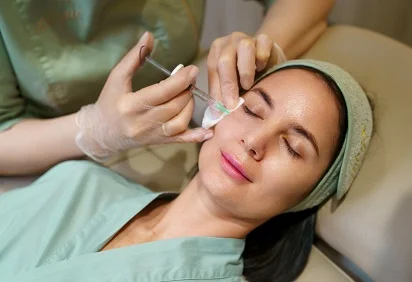
PDRN injections for the eye area are administered using a fine micro-injection technique specifically suited to delicate periorbital skin, using a formulation designed for that area. The treatment is quick, non-invasive and typically involves little to no downtime beyond some mild, short-lived redness or swelling.
As with polynucleotide treatments elsewhere on the face, a course of two to three sessions spaced a few weeks apart tends to give the best results, with hydration and brightness often visible early on and firmer, smoother texture developing over the following weeks. Results generally last several months, with occasional top-ups helping to maintain them.
Worth trying?
If your under-eye area looks tired regardless of how much sleep you get, PDRN is worth a conversation at your next consultation. It’s a gentle, biology-driven way to treat one of the hardest-to-reach areas of the face — improving how your skin looks and behaves, rather than just filling in the gaps. As it’s a delicate area to treat, it’s worth booking with a practitioner experienced specifically in eye rejuvenation. In London, clinics such as Oblique offer pdrn injections tailored to the eye area — you can find out more at https://obliquebeauty.uk
About the Author